
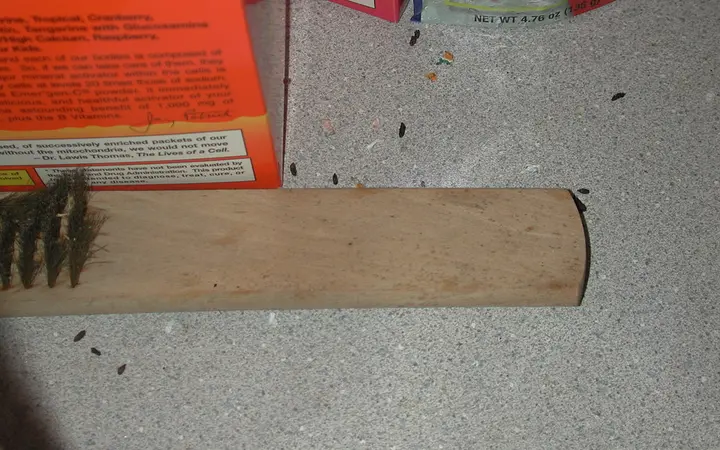
Signs you have a problem with mice
- Small, dark droppings (3–6 mm) in cupboards, drawers and along skirting boards
- Nibbled food packaging, especially cereals, grains and pet food
- Scratching in walls, ceilings or under kitchen units at night
- Shredded paper, fabric or insulation used for nests
- A musty, ammonia-like smell
Why it's worth dealing with quickly
House mice contaminate food and surfaces with urine and droppings, which can spread salmonella and other bacteria. They also chew cables, which can be a fire risk.
How we treat mice
- Inspect the property to find nests, runs and entry points
- Treat with traps or tamper-resistant bait stations, placed safely
- Follow-up visits to check activity and remove any dead mice
- Proof gaps around pipes, doors, vents and kitchen units
How to stop them coming back
- Store food in sealed containers, including pet food and bird seed
- Clean up crumbs and spills, especially under appliances
- Fit brush strips to the bottom of doors and seal small gaps
- Keep garages and sheds tidy so mice have fewer places to nest
Questions about mice
If I've seen one mouse, are there more?
Usually, yes. Mice breed quickly and are rarely alone, so it's worth getting it checked early.
How quickly can you come out?
We offer same-day and next-day appointments in most of Kent. Call or WhatsApp us for the fastest slot.
Will mice come back after treatment?
Proofing the entry points is part of the job, which is the best way to stop new mice getting in.