
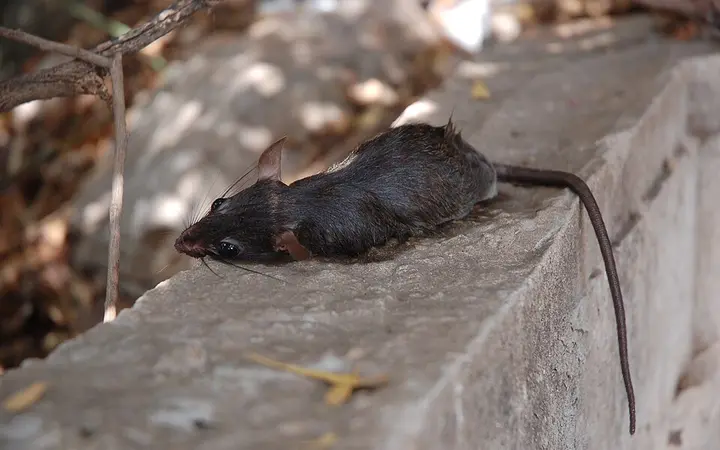
Signs you have a problem with rats
- Droppings: dark, about 1–2 cm long, often in groups along walls
- Scratching or scurrying in lofts, walls or under floors, especially at night
- Gnaw marks on wood, cables, pipes or food packaging
- Greasy smear marks along skirting boards and around holes
- Burrows in gardens, under sheds or next to patios and decking
- A strong, stale smell in enclosed spaces
Why it's worth dealing with quickly
Brown rats carry diseases including Weil's disease (leptospirosis) and salmonella. Their gnawing is a common cause of electrical faults and water leaks, and a pair can become a large colony within months.
How we treat rats
- Survey the property to find activity, runs and entry points, including drains
- Treat with tamper-resistant bait stations or traps placed where children and pets can't reach
- Return visits to check activity and remove any dead rodents
- Proof gaps, air bricks, pipe entries and damaged drains so rats can't get back in
How to stop them coming back
- Keep bins closed and don't leave food waste or bird seed on the ground
- Seal gaps around pipes and cables wider than 1.5 cm
- Cut back vegetation and clear clutter next to the house
- Get damaged drains checked; many rat problems start there
Questions about rats
How many visits does rat treatment take?
Most homes need two or three visits over a couple of weeks so we can confirm the problem is fully resolved and proof any entry points.
Is rat treatment safe for children and pets?
Yes. We use locked, tamper-resistant bait stations and place them out of reach, and we'll explain any precautions before we start.
Can you find out how rats are getting in?
Yes. Finding and proofing the entry point is part of every rat job, because treatment alone won't stop new rats arriving.